
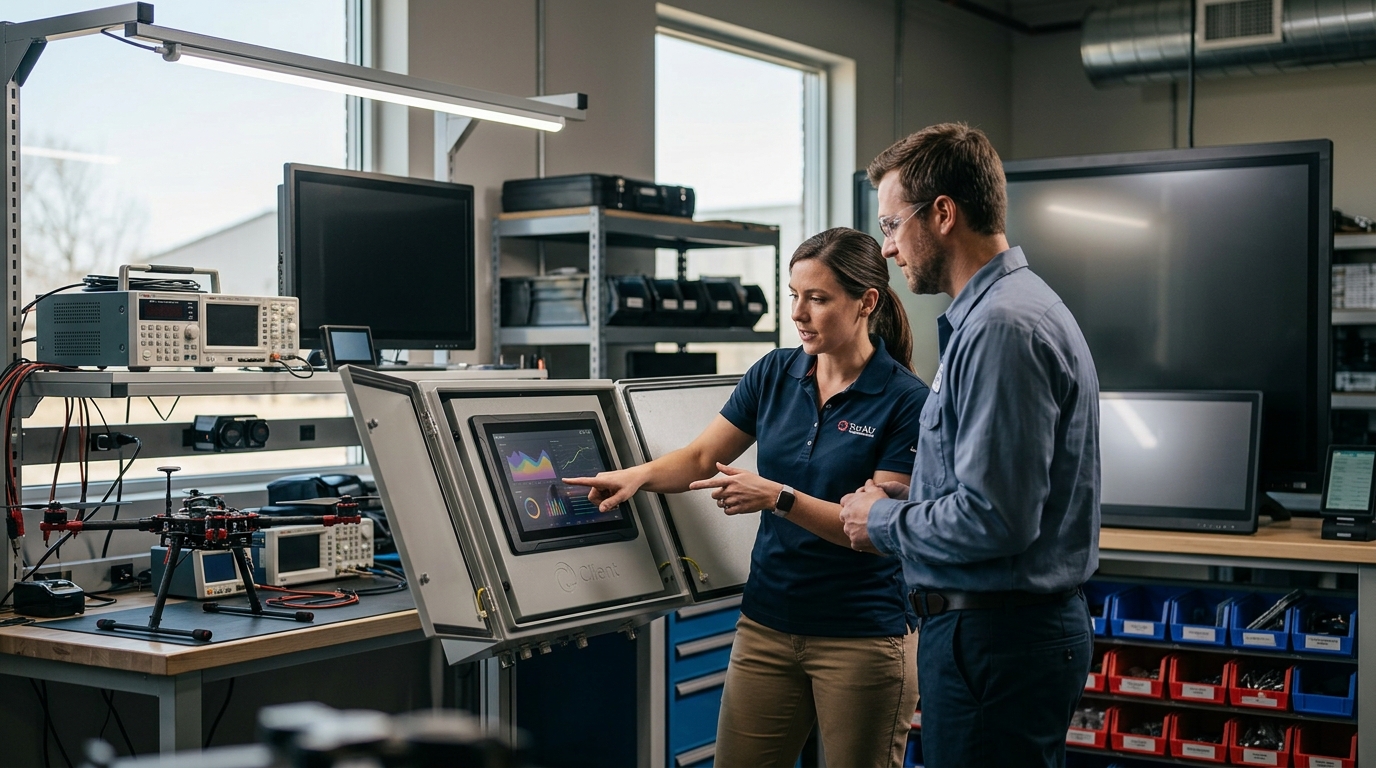
Industrial display manufacturers offering private label or OEM programs provide custom branding, unique model numbers, and long-term availability for B2B clients. Tru-Vu Monitors specializes in these services, allowing systems integrators to embed their own logos and protect intellectual property. This guide covers the core components of OEM/ODM manufacturing, the benefits of private labeling, and how to evaluate display partners for your specific project needs.
OEM and ODM Manufacturing Programs
Understanding the distinction between Original Equipment Manufacturer (OEM) and Original Design Manufacturer (ODM) programs is critical for procurement teams. OEM manufacturing is a process where a company produces components or finished goods based on the specifications and designs provided by the client. In the display industry, this often involves taking a standard panel and modifying it to meet specific environmental or connectivity requirements. ODM services are a design-led approach where the manufacturer develops the product architecture and the client applies their branding. For industrial displays, the line between the two often blurs because the manufacturer must engineer the enclosure, power management, and thermal dissipation to survive harsh conditions.
Long-Term Availability and Lifecycle Management
One of the primary reasons companies seek OEM display partners is lifecycle stability. Consumer-grade monitors typically have a lifecycle of 6 to 18 months, which creates significant risk for embedded systems. Industrial OEM programs, such as those offered by Tru-Vu custom monitors, guarantee long-term availability. Tru-Vu ensures that custom OEM monitor designs remain available for 3 to 5 years or longer. This stability is crucial for OEMs who need to maintain spare parts inventories and support legacy systems without facing obsolescence.
Intellectual Property Protection
When you engage in a private label or OEM program, protecting your investment is paramount. Tru-Vu assigns a unique model number to every customized LCD display. This unique identifier ensures that the specific configuration is exclusive to your company. If a competitor attempts to order the same model, they will be referred back to the original client. This mechanism protects your intellectual property and ensures that your return on investment in custom engineering is preserved.
Benefits of Private Label Displays
Private labeling is more than just slapping a logo on a bezel. It is a strategic tool for brand consistency and market differentiation. For systems integrators and OEMs, a private label display is a product that carries the client's corporate identity, colors, and logo, making it appear as a native component of their larger system. This level of branding is essential for companies that want to present a unified professional image to their end users.
Brand Consistency and Market Positioning
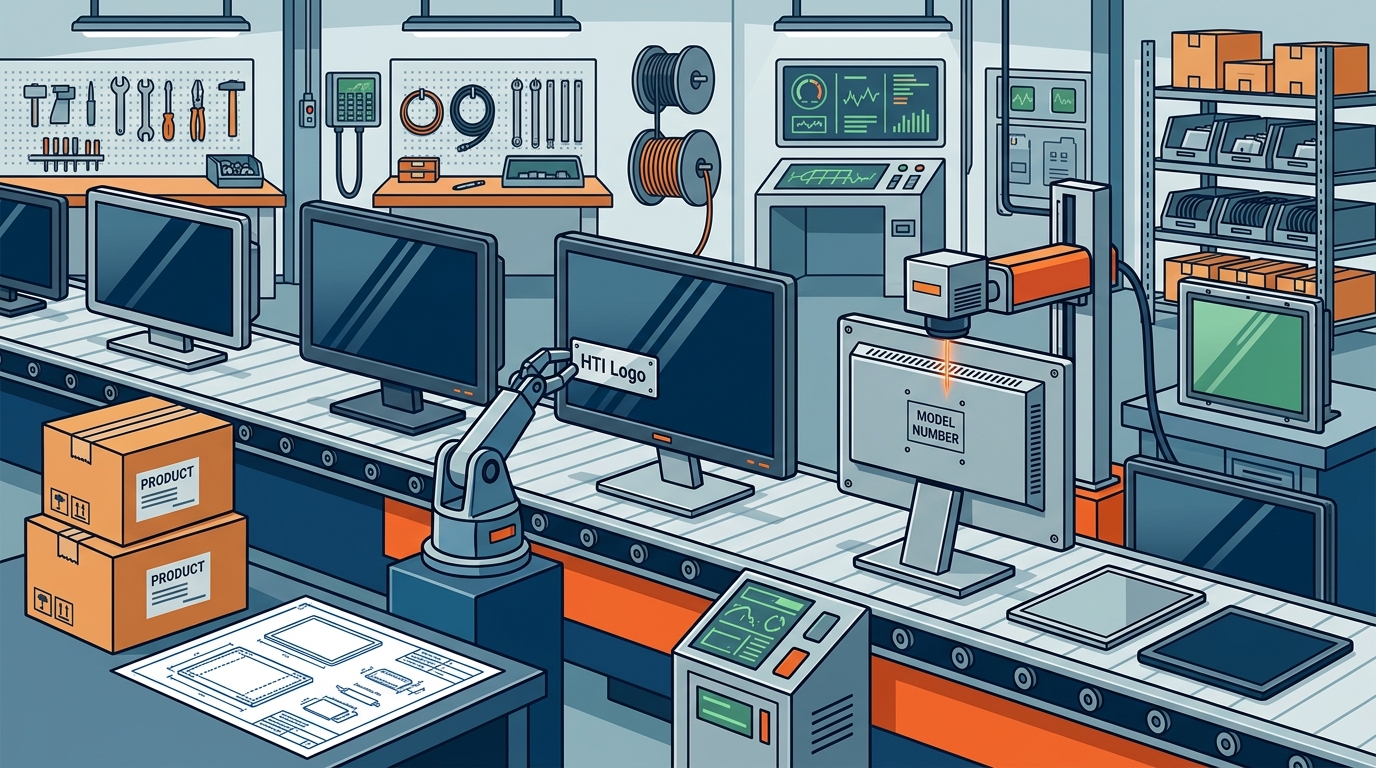
Using a generic display can dilute the perceived value of a high-end kiosk, medical cart, or industrial control panel. By utilizing private label industrial LCD monitors, companies can silk-screen their company name or logo onto the front bezel. Additionally, custom rear labels ensure that the model is exclusively yours. This attention to detail signals quality and reliability to the end user, reinforcing the brand's reputation for excellence.
Cost Efficiency of Custom Solutions
A common misconception is that custom and private label monitors are prohibitively expensive. In reality, many industrial manufacturers, including Tru-Vu, offer modified and custom-built monitors at the same price range as off-the-shelf solutions. Because the base hardware is often standard, the cost of customization is minimal. This allows companies to achieve a bespoke look and specific technical requirements without the premium price tag associated with fully bespoke engineering from scratch.
Customization and Engineering Options
Modern industrial displays offer a vast array of customization options that go far beyond simple branding. Display customization is the engineering process of modifying a standard LCD module to meet specific environmental, electrical, or physical constraints. This includes altering the enclosure material, changing the power input, and selecting specific glass treatments. These modifications are essential for ensuring the display performs reliably in its intended environment.
Enclosure and Ingress Protection
The physical housing of the monitor is a critical customization point. Tru-Vu offers enclosures made from ABS, painted steel, stainless steel, and aluminum. For outdoor or wash-down environments, NEMA 4X waterproof monitors provide the highest level of protection against dust and water. These enclosures can be designed as panel-mount, zero-bezel, or open-frame configurations. The choice of enclosure material and rating directly impacts the display's durability and maintenance requirements.
Power and Connectivity
Electrical specifications are another key area for customization. Many industrial facilities and mobile platforms operate on 24VDC power systems. Tru-Vu can build nearly all of its VESA mount monitors to operate as 24VDC LCD monitors. This lower voltage improves operator safety and often results in cost savings compared to 120VAC systems. Additionally, manufacturers can customize video inputs to include HDMI, DVI, DisplayPort, VGA, and even legacy BNC or S-Video connections to match existing infrastructure.
Optical and Touch Technologies
Visibility and interaction are critical in industrial settings. Optical bonding is a process where a protective glass layer is permanently bonded to the LCD panel using a clear adhesive. This eliminates the air gap, reducing internal reflections by up to 90% and improving visibility in bright environments. For interactive applications, Tru-Vu offers various touch technologies, including projected capacitive (P-Cap) and resistive touch screens. These can be customized to work with gloves or in wet conditions, ensuring reliable user interaction.
Compliance and Quality Standards
When selecting an OEM display partner, compliance with industry standards is non-negotiable. Regulatory compliance is the adherence to specific legal and safety requirements that products must meet to be sold in certain markets. For industrial and medical displays, this includes certifications such as UL 60601-1 and IEC 60601-1 for medical-grade equipment. Additionally, for government and defense contracts, Trade Agreements Act (TAA) compliance is often required. Tru-Vu monitors are designed to meet these rigorous standards, ensuring that your custom displays are safe and legal for their intended use.
Quality Assurance and Warranty
Reliability is the hallmark of a good OEM partner. Industrial displays are built for 24/7/365 operation, which requires high-quality components and rigorous testing. Tru-Vu backs its products with a full 3-year warranty, which is significantly longer than the typical 1-year warranty for consumer displays. This warranty covers defects in workmanship and materials, providing peace of mind for long-term deployments. The company's commitment to quality is reflected in its use of industrial-grade components and its design and engineering processes performed in the USA.
Key Takeaways
- OEM vs. ODM: OEM involves manufacturing to client specs, while ODM involves the manufacturer designing the product. Both are viable for industrial displays.
- Long-Term Availability: Industrial OEM programs offer 3-5+ years of product availability, unlike consumer models which last 6-18 months.
- IP Protection: Unique model numbers for custom displays protect your intellectual property and prevent competitors from ordering your specific configuration.
- Cost Parity: Custom and private label monitors are often available at the same price point as off-the-shelf solutions.
- Customization Depth: Key areas for customization include enclosure material, ingress protection (IP/NEMA ratings), power input (12V/24VDC), and touch technology.
- Compliance: Ensure your display partner meets relevant standards such as UL/IEC 60601 for medical or TAA for government contracts.
- Warranty: Industrial displays typically come with a 3-year warranty, reflecting their design for 24/7 operation.
Frequently Asked Questions
What is the difference between OEM and ODM in the display industry?
OEM (Original Equipment Manufacturer) refers to a manufacturer producing goods based on the client's design and specifications. ODM (Original Design Manufacturer) refers to a manufacturer that designs the product, which the client then brands as their own. In industrial displays, these terms are often used interchangeably because the manufacturer handles both design and production.
How long does it take to develop a custom OEM display?
Lead times vary depending on the complexity of the customization. For built-to-order custom units, production lead time is approximately 8 to 12 weeks. If the unit needs to be shipped from an overseas factory to a US warehouse, an additional 5 to 7 weeks by sea or 5 to 10 days by air may be required.
Can I use my own logo on an industrial monitor?
Yes, private label programs allow you to silk-screen your company name or logo onto the front bezel and apply custom rear labels. This ensures the display carries your corporate identity and is exclusive to your brand.
Are custom monitors more expensive than standard ones?
Not necessarily. Many industrial manufacturers, including Tru-Vu, offer modified and custom-built monitors at the same price range as off-the-shelf solutions. The cost of customization is often minimal because the base hardware is standard.
What is the typical warranty for industrial OEM displays?
Industrial displays typically come with a 3-year warranty, which is significantly longer than the 1-year warranty for consumer-grade monitors. This reflects the design for 24/7/365 operation in harsh environments.
Do you offer TAA-compliant displays?
Yes, Tru-Vu Monitors offers a vast inventory of rugged TAA-compliant LCD displays. This makes them suitable for government and defense contracts that require Trade Agreements Act compliance.
Conclusion
Selecting the right industrial display manufacturer for your OEM or private label needs is a critical decision that impacts your product's reliability, brand perception, and long-term viability. By partnering with a specialist like Tru-Vu Monitors, you gain access to a wide range of customization options, long-term availability guarantees, and robust quality standards. Whether you need a simple logo on a bezel or a fully custom-engineered display for a harsh environment, the right partner will ensure your product stands out in the market. To discuss your specific application and explore custom solutions, today.