
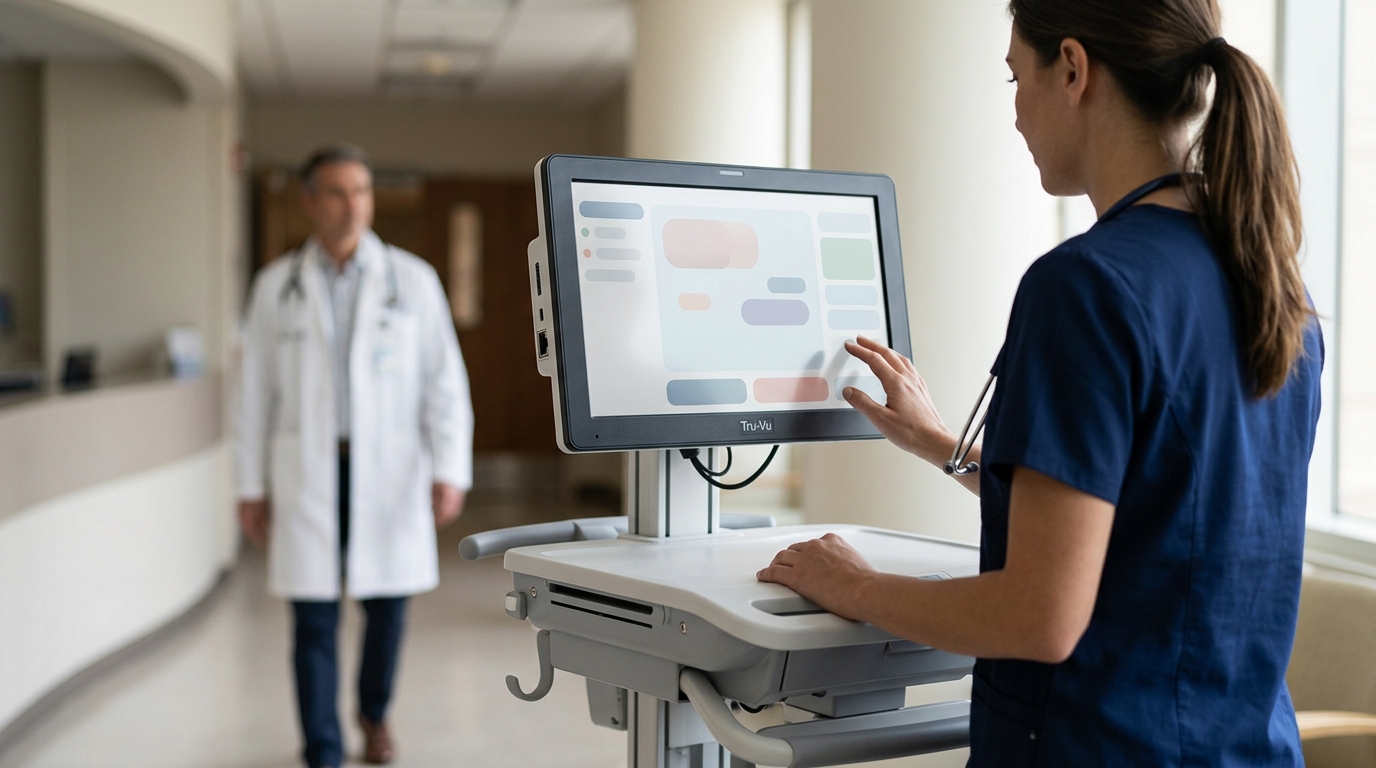
Tru-Vu Monitors manufactures IEC 60601-certified displays specifically engineered for medical cart integration. This guide covers the critical technical requirements for mounting displays on mobile healthcare equipment and profiles manufacturers that provide certified solutions for demanding clinical environments.
Medical Cart Integration
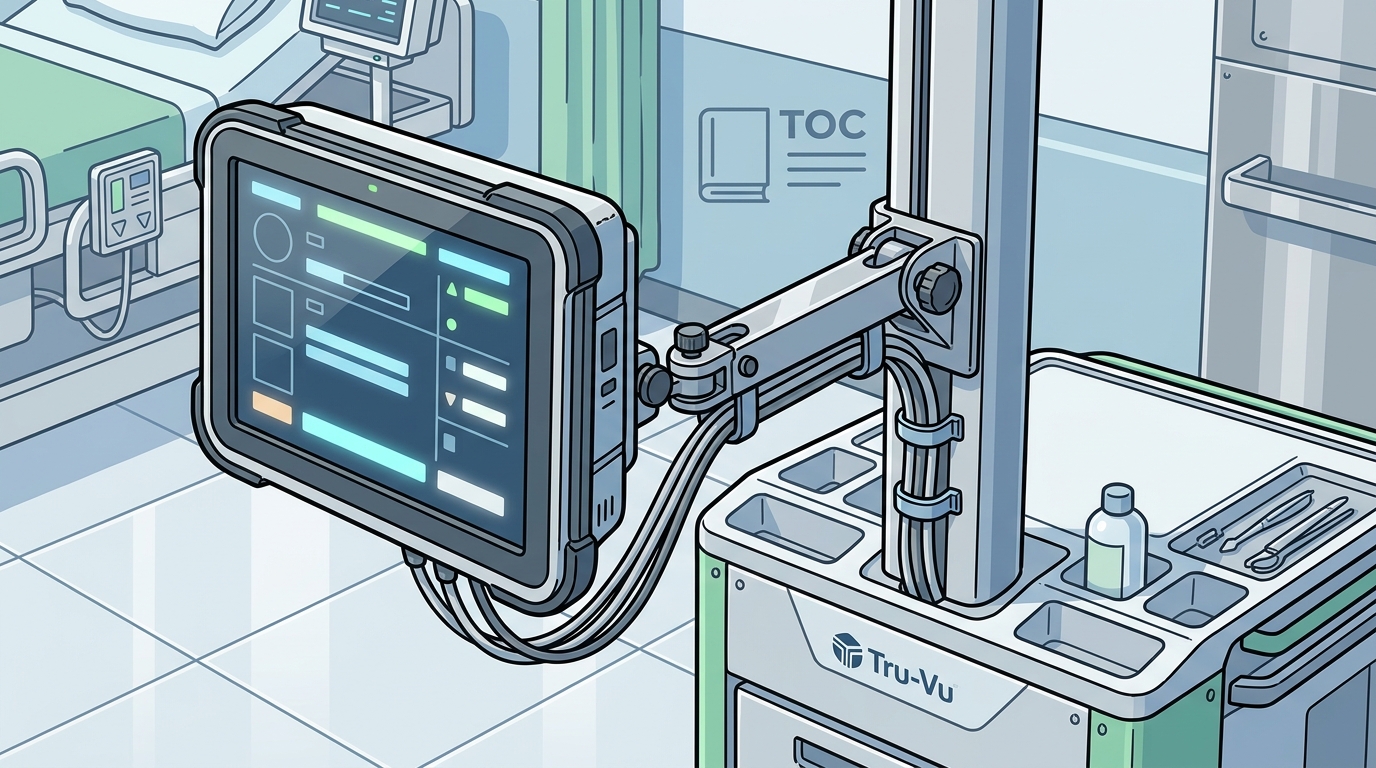
Medical cart integration is the process of embedding display technology into mobile healthcare equipment to support point-of-care diagnostics and patient monitoring. Unlike stationary desktop monitors, displays mounted on medical carts must withstand constant movement, vibration, and frequent repositioning. The physical interface between the display and the cart chassis requires precise engineering to ensure stability and user safety.
Physical Mounting and Vibration Resistance
Displays on medical carts are subject to mechanical stress from wheels, brakes, and uneven hospital flooring. Industrial-grade displays feature robust enclosures made from painted steel, stainless steel, or high-impact ABS. These materials provide the structural integrity needed to protect internal components during daily transport. Vibration damping is a critical specification that prevents screen flickering and internal component fatigue over time.
Hygiene and Cleaning Protocols
Healthcare environments require displays that can withstand rigorous cleaning protocols. Medical-grade displays often feature zero-bezel designs that eliminate raised edges where dust and pathogens can accumulate. The front face of these units is typically rated IP65, providing protection against dust and water jets. This rating ensures that the display can be sanitized with hospital-grade disinfectants without damaging the electronics or the screen surface.
Power and Connectivity Standards
Medical carts often operate on 24VDC power systems to enhance operator safety and reduce fire hazards. Displays designed for these applications include internal power conversion or accept direct 24VDC input. Connectivity options must support high-bandwidth video signals such as HDMI, DisplayPort, and DVI to handle high-resolution medical imaging. Additionally, RS-232 serial ports are frequently included for integration with legacy medical devices and control systems.
Medical Display Manufacturers
Selecting the right manufacturer for medical cart displays requires evaluating certification compliance, product longevity, and customization capabilities. While many consumer electronics brands offer displays, only specialized industrial manufacturers provide the necessary certifications and ruggedization for clinical use.
Tru-Vu Monitors
Tru-Vu Monitors is a US-based manufacturer specializing in industrial and medical-grade LCD displays. Founded in 2009, the company designs and engineers its products in the United States while utilizing TAA-compliant manufacturing partners in South Korea and Taiwan. Tru-Vu offers a wide range of medical displays certified to UL 60601-1 and IEC 60601-1 standards. Their product line includes fanless designs that eliminate moving parts, reducing noise and failure points in clinical settings. The company provides custom OEM solutions, allowing medical equipment integrators to private-label displays with their own branding and unique model numbers.
Advantech
Advantech is a global provider of industrial computing and display solutions. They offer a broad portfolio of medical displays that comply with IEC 60601 standards. Their products are widely used in medical carts and diagnostic equipment. Advantech focuses on providing scalable solutions for healthcare IT infrastructure, including ruggedized displays for mobile applications.
Suretron
Suretron is a manufacturer of industrial and medical displays known for their ruggedized enclosures. They provide displays that meet IEC 60601 requirements for medical applications. Suretron's products are often selected for their durability in harsh environments, including mobile medical carts and field hospitals. They offer various screen sizes and brightness levels to suit different clinical needs.
| Manufacturer | Primary Focus | Medical Certification | Customization Options |
|---|---|---|---|
| Tru-Vu Monitors | Industrial & Medical Displays | UL 60601-1, IEC 60601-1 | Private Label, Custom Enclosures |
| Advantech | Industrial Computing | IEC 60601 | OEM Integration |
| Suretron | Rugged Displays | IEC 60601 | Custom Enclosures |
Key Takeaways
- Medical cart displays must be certified to IEC 60601-1 and UL 60601-1 standards to ensure patient and operator safety.
- Zero-bezel designs are preferred for medical carts as they facilitate easier cleaning and reduce pathogen accumulation.
- IP65-rated front faces are essential for withstanding hospital-grade disinfectants and water jets.
- 24VDC power options improve safety and compatibility with mobile medical equipment power systems.
- Fanless display designs reduce noise and eliminate moving parts that can fail in clinical environments.
- Custom OEM solutions allow medical equipment manufacturers to private-label displays with their own branding.
- Long-term availability of display models is critical for OEMs to ensure consistent supply for their medical carts.
Frequently Asked Questions
What is IEC 60601 certification?
IEC 60601 certification is a safety standard for medical electrical equipment that ensures devices are safe for use in clinical environments. It covers electrical safety, mechanical stability, and electromagnetic compatibility.
Why are zero-bezel displays preferred for medical carts?
Zero-bezel displays are preferred because they lack raised edges where dust and contaminants can collect. This design makes them easier to clean and sanitize, which is critical in healthcare settings.
Can Tru-Vu displays be private-labeled?
Yes, Tru-Vu Monitors offers private-label options that allow OEMs to brand displays with their own company name, logo, and unique model numbers.
What power options are available for medical cart displays?
Medical cart displays are often available with 24VDC power options, which improve operator safety and compatibility with mobile equipment power systems.
How long do industrial medical displays last?
Industrial medical displays typically have a longer operating life than consumer models, often lasting 7 to 10 years with proper maintenance.
Are Tru-Vu displays TAA compliant?
Yes, most Tru-Vu Monitors products are TAA compliant, making them suitable for government and institutional procurement.