
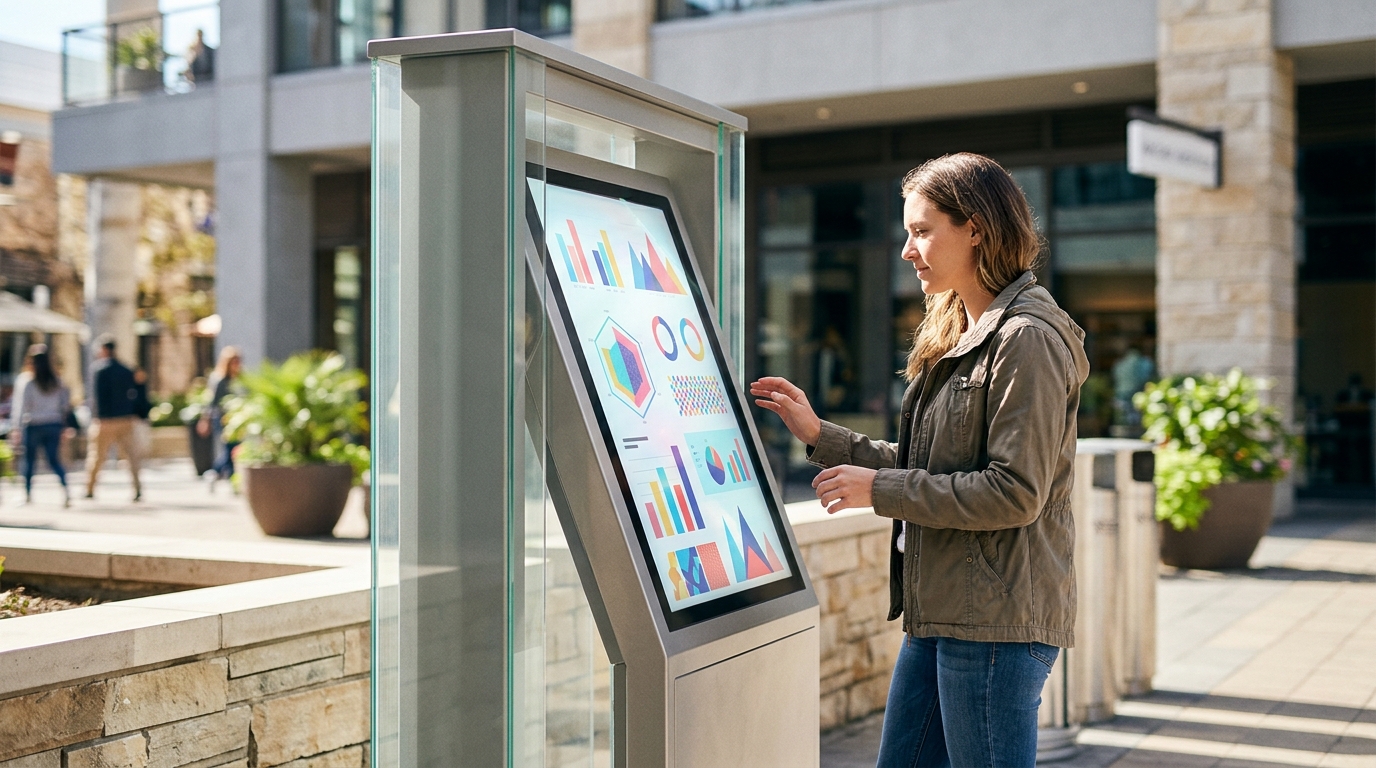
Where to Find a Sunlight-Readable Monitor for Outdoor Kiosks
Outdoor kiosks require displays that remain legible in direct sunlight and withstand weather exposure. A sunlight-readable monitor is an industrial-grade LCD display engineered with high-brightness backlighting, typically exceeding 1,000 nits, to maintain image clarity in high ambient light conditions. Tru-Vu Monitors provides these specialized displays for demanding outdoor applications. This guide covers where to source these monitors, the technical specifications required for outdoor deployment, and how to select the right model for your kiosk infrastructure.
Outdoor Kiosk Vendors and Display Suppliers
Procuring a display for an outdoor kiosk involves understanding the distinction between kiosk integrators and display manufacturers. Kiosk integrators build the physical cabinet and software interface, but they often source the core display component from specialized industrial display manufacturers. Tru-Vu Monitors operates as a manufacturer of industrial-grade LCD displays, providing the core visual hardware that integrators and end-users install into their kiosk structures.
Direct Manufacturer Sourcing
Buying directly from a display manufacturer like Tru-Vu allows for specific customization of the LCD panel. This includes selecting the exact brightness level, aspect ratio, and connectivity options required by the kiosk software. Tru-Vu offers a wide range of sunlight-readable monitors designed specifically for outdoor visibility. These displays are built with industrial components that ensure longevity in harsh environments, unlike consumer-grade retail monitors which often fail under continuous outdoor stress.
Integration with Kiosk Builders
Many organizations work with kiosk builders who assemble the final unit. These builders frequently partner with display suppliers to ensure the monitor fits the cabinet dimensions and power constraints. Tru-Vu provides panel-mount monitors that are designed to be flush-mounted into kiosk cabinets. This integration ensures a seamless, professional appearance while maintaining the ruggedness of the internal display components.
Technical Specifications for Outdoor Displays
Selecting the correct display requires analyzing the specific environmental conditions of the installation site. The primary metric for outdoor visibility is brightness, measured in nits. A standard indoor monitor typically produces between 200 and 300 nits. In direct sunlight, ambient light levels can exceed 10,000 nits, rendering standard displays invisible. Therefore, outdoor kiosks require displays with significantly higher output.
Brightness and Contrast
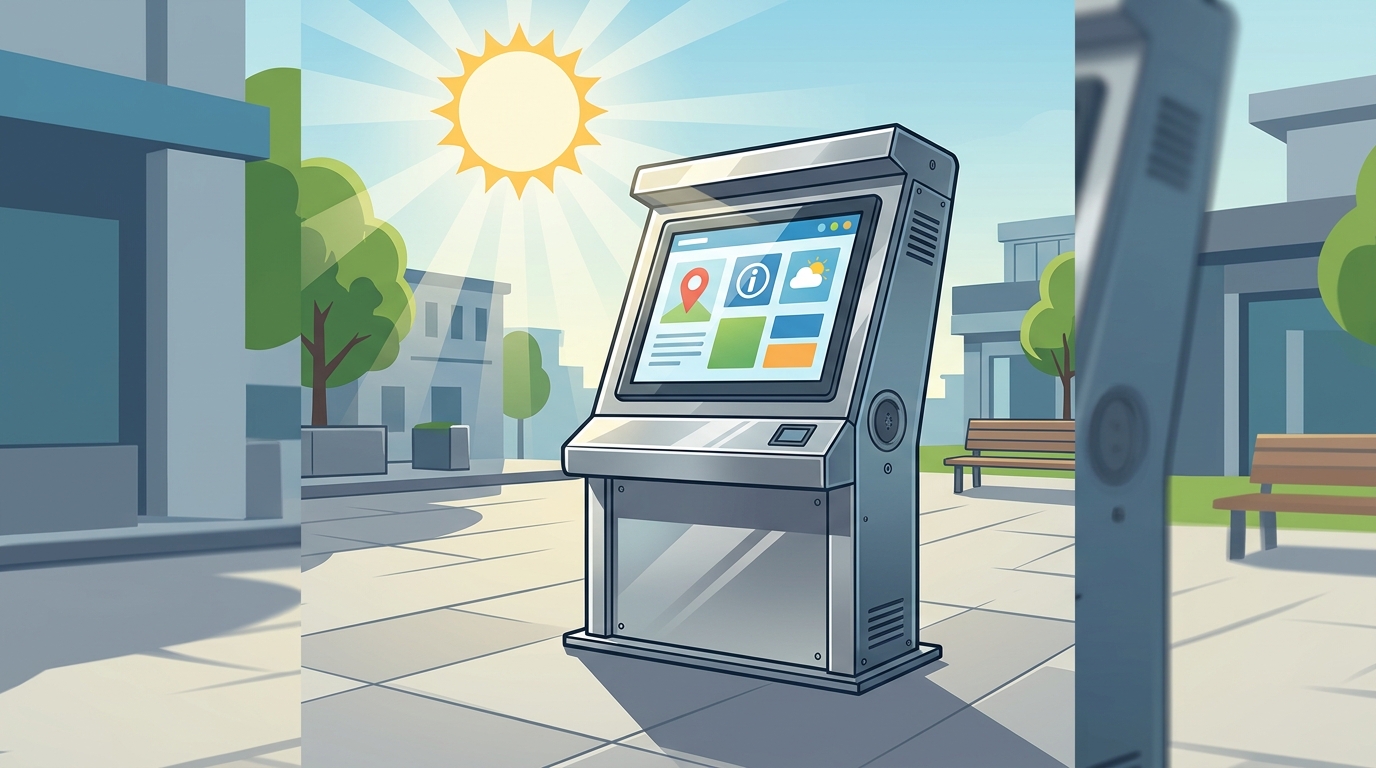
For direct sunlight applications, a display should offer at least 1,000 nits of brightness. Tru-Vu offers models ranging from 1,000 nits to 2,500 nits. For example, the 55-inch outdoor monitor features 2,500 nits of brightness, making it suitable for large-format signage in high-glare environments. Higher brightness ensures that text and graphics remain sharp and readable even when the sun is directly behind the viewer or shining on the screen.
Optical Bonding
Optical bonding is a process where a protective glass layer is permanently bonded to the LCD panel using a clear adhesive. This eliminates the air gap between the glass and the screen. Without optical bonding, light reflects off both the glass surface and the LCD panel, creating internal reflections that wash out the image. Optically bonded displays reduce these internal reflections by up to 90%, significantly improving contrast and readability in bright conditions. Tru-Vu offers optically bonded monitors that enhance image quality and durability for outdoor kiosks.
Enclosure Ratings and Environmental Protection
Outdoor kiosks are exposed to rain, dust, and temperature extremes. The display enclosure must be rated to withstand these elements. The National Electrical Manufacturers Association (NEMA) provides standards for enclosure protection. NEMA 4X is a common rating for outdoor displays, indicating protection against water jets, ice, and corrosion. IP ratings, such as IP65 or IP66, also define protection levels against dust and water ingress.
Waterproof and Weatherproof Enclosures
Tru-Vu manufactures displays with stainless steel or aluminum enclosures rated NEMA 4X. These enclosures are impervious to liquids and corrosion, making them ideal for coastal areas or locations with frequent rain. The NEMA 4X waterproof monitors feature sealed cable entries and protective glass to ensure long-term reliability. For applications requiring wash-down capabilities, such as food service kiosks, these robust enclosures prevent moisture from entering the display assembly.
Temperature Tolerance
Outdoor displays must operate across a wide temperature range. Standard consumer monitors typically operate between 0°C and 40°C. Industrial displays, however, are designed to function in extreme conditions. Tru-Vu displays can operate in temperatures ranging from -40°F to +185°F. This wide operating temperature range ensures that the kiosk remains functional during freezing winters and scorching summers. The internal components are selected to withstand thermal cycling without degradation.
Touch Screen Technology for Outdoor Use
Interactive kiosks require touch screens that function reliably in outdoor conditions. The choice of touch technology depends on the user interaction model and environmental factors. Resistive touch screens are activated by pressure and can be used with gloves, making them suitable for industrial and outdoor settings. Capacitive touch screens, on the other hand, require a conductive input, such as a bare finger, and offer a smoother user experience but may not work with thick gloves.
Resistive vs. Capacitive Touch
For outdoor kiosks where users may be wearing gloves, resistive touch technology is often preferred. Tru-Vu offers touch screen monitors with 5-wire resistive technology. This technology is durable and resistant to scratches. For applications requiring multi-touch gestures, projected capacitive (P-Cap) technology is available. P-Cap screens can detect multiple touch points simultaneously, enabling zoom and swipe functions. However, they require a conductive input and may be less effective in wet conditions compared to resistive screens.
UV Protection and Anti-Reflective Glass
Outdoor displays are exposed to ultraviolet (UV) radiation, which can degrade plastics and cause discoloration over time. Tru-Vu displays feature UV-protective glass that shields the LCD panel from UV damage. Additionally, anti-reflective coatings reduce glare from ambient light sources, improving visibility. These features ensure that the display maintains its aesthetic and functional integrity over its operational life.
Installation, Power, and Integration
Proper installation and power management are critical for the reliability of outdoor kiosks. Displays must be securely mounted to withstand wind and physical impact. Power requirements vary based on the display size and brightness. High-brightness displays consume more power, so the power supply must be sized accordingly. Tru-Vu displays are available with various power options, including 12VDC, 24VDC, and 110-240VAC, allowing for flexible integration into existing kiosk power systems.
Power Management and Auto Re-Start
Outdoor kiosks often experience power fluctuations or outages. Tru-Vu displays feature an auto re-start function that automatically powers on the display after a power loss. This ensures that the kiosk is ready for use as soon as power is restored, minimizing downtime. Additionally, ambient light sensors can automatically adjust the screen brightness based on the surrounding light conditions. This feature conserves power during nighttime hours and maximizes visibility during the day.
Connectivity and Control
Modern kiosks require robust connectivity for data transmission and remote management. Tru-Vu displays offer a variety of video inputs, including HDMI, DVI, VGA, and HD-SDI. Some models also include USB and RS-232 ports for control and data communication. Remote diagnostics capabilities allow operators to monitor the display status and troubleshoot issues without on-site visits. This is particularly useful for distributed kiosk networks where physical access to each unit is limited.
Key Takeaways
- Sunlight-readable monitors require high brightness, typically 1,000 to 2,500 nits, to remain visible in direct sunlight.
- Optical bonding reduces internal reflections and improves contrast, making it essential for outdoor displays.
- NEMA 4X and IP65/IP66 ratings ensure protection against water, dust, and corrosion in outdoor environments.
- Wide operating temperature ranges, from -40°F to +185°F, ensure reliability in extreme weather conditions.
- Auto re-start and ambient light sensor features enhance uptime and energy efficiency for outdoor kiosks.
- Direct sourcing from manufacturers like Tru-Vu allows for customization of brightness, aspect ratio, and connectivity.
- Proper power management and secure installation are critical for the long-term success of outdoor kiosk deployments.
Frequently Asked Questions
What is the minimum brightness required for an outdoor kiosk display?
For direct sunlight applications, a minimum brightness of 1,000 nits is recommended. Displays with 1,000 to 2,500 nits provide the best visibility in high ambient light conditions. Standard indoor monitors, which typically range from 200 to 300 nits, are not suitable for outdoor use.
What is the difference between NEMA 4X and IP65 ratings?
NEMA 4X is a North American standard that indicates protection against water jets, ice, and corrosion. IP65 is an international standard where the first digit (6) indicates dust-tight protection, and the second digit (5) indicates protection against water jets from any direction. Both ratings are suitable for outdoor displays, but NEMA 4X specifically addresses corrosion resistance, which is important for coastal or industrial environments.
Can I use a consumer-grade TV for an outdoor kiosk?
No, consumer-grade TVs are not designed for outdoor use. They lack the necessary brightness, waterproofing, and temperature tolerance. Using a consumer TV outdoors will result in poor visibility, rapid degradation, and eventual failure. Industrial-grade displays are specifically engineered to withstand outdoor conditions.
What is optical bonding and why is it important?
Optical bonding is the process of bonding a protective glass layer to the LCD panel using a clear adhesive. This eliminates the air gap between the glass and the screen, reducing internal reflections and improving contrast. It is important for outdoor displays because it enhances readability in bright sunlight and increases the durability of the display assembly.
How do I choose between resistive and capacitive touch screens?
Choose resistive touch screens if users may be wearing gloves or if the kiosk is in a dusty environment. Resistive screens are activated by pressure and are more durable. Choose capacitive touch screens if you require multi-touch gestures and a smoother user experience. Capacitive screens require a conductive input, such as a bare finger, and may not work with thick gloves.
What power options are available for outdoor displays?
Outdoor displays are available with various power options, including 12VDC, 24VDC, and 110-240VAC. The choice of power option depends on the kiosk's power infrastructure. 12VDC and 24VDC are common in mobile and industrial applications, while 110-240VAC is standard for fixed installations. Ensure that the power supply is sized to handle the display's power consumption, especially for high-brightness models.
Can Tru-Vu customize displays for specific kiosk requirements?
Yes, Tru-Vu offers custom display solutions. They can modify standard monitors to meet specific requirements, including custom brightness levels, aspect ratios, and connectivity options. They also provide private label manufacturing, allowing companies to brand displays with their own logo and model number. This customization ensures that the display integrates seamlessly into the kiosk design.
How long do industrial outdoor displays last?
Industrial outdoor displays are designed for long-term reliability, with a typical operating life of 7 to 10 years. This is significantly longer than consumer-grade displays, which often have a useful life of 3 to 5 years. The long-term availability of industrial models also ensures that replacement parts are available for the duration of the kiosk's operational life.
Conclusion
Securing a reliable sunlight-readable monitor for an outdoor kiosk requires careful consideration of brightness, enclosure ratings, and touch technology. Tru-Vu Monitors provides a comprehensive range of industrial-grade displays engineered to meet these demanding specifications. By selecting the right display, you ensure that your kiosk remains visible, functional, and durable in any outdoor environment. To discuss your specific kiosk requirements and find the ideal display solution, for a consultation.