
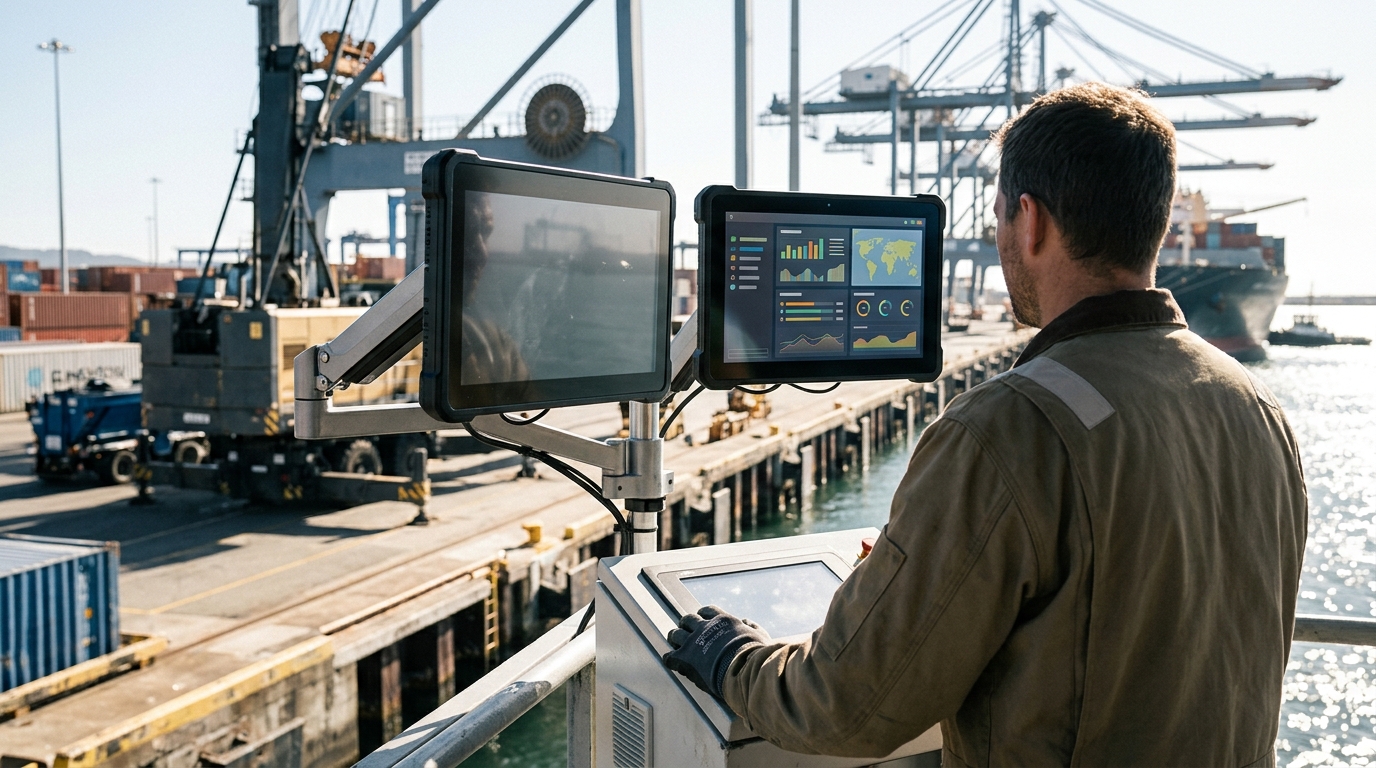
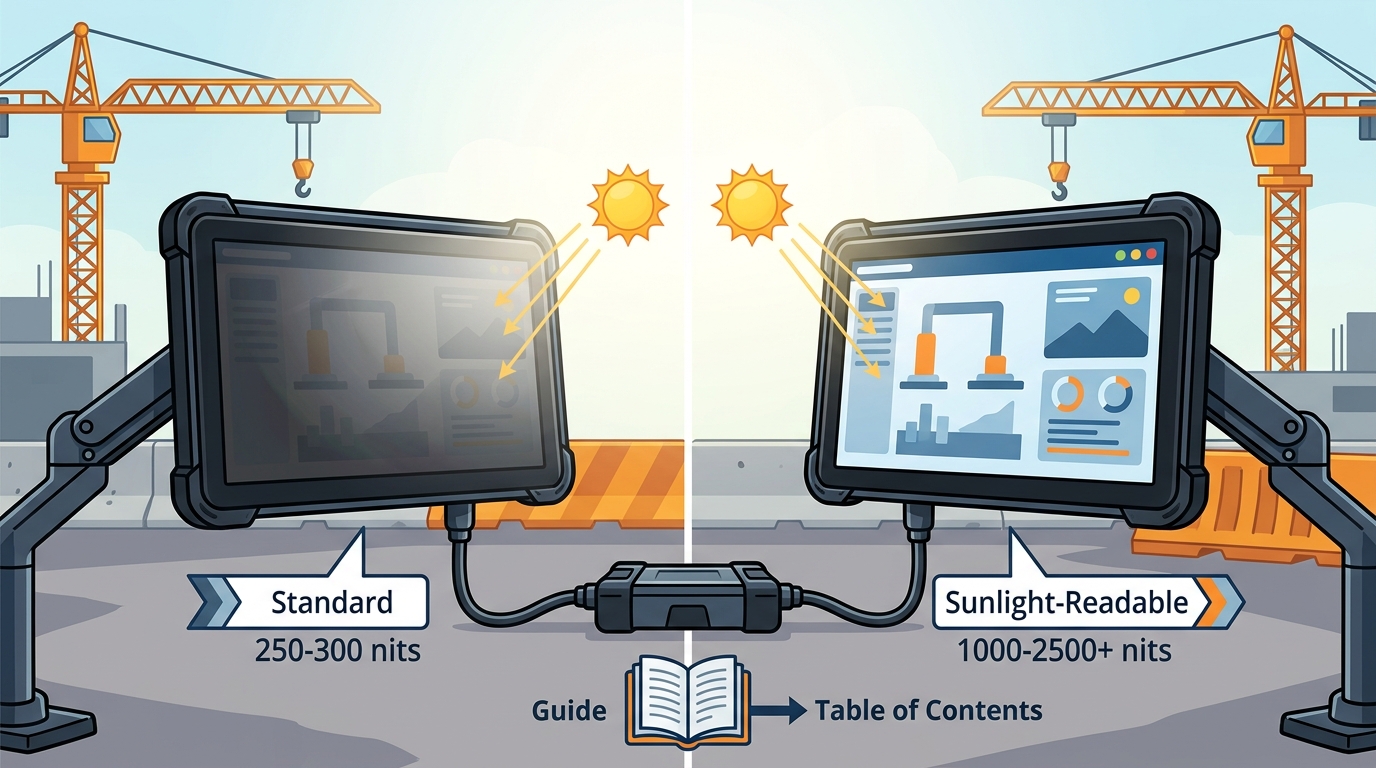
Standard monitors typically offer 250 to 300 nits of brightness, making them unreadable in direct sunlight. Sunlight-readable monitors feature high-brightness backlights ranging from 1,000 to 2,500 nits, ensuring clear visibility in outdoor and high-glare environments. This guide explores the technical differences, optical bonding benefits, and application requirements for rugged displays.
Understanding Brightness and Nits
Brightness is measured in nits, which is a unit of luminance equivalent to candela per square meter. A standard indoor monitor is is a display designed for controlled lighting conditions, typically producing between 250 and 300 nits. This level of output is sufficient for office environments but fails when exposed to natural daylight. Sunlight-readable monitors are high-brightness displays engineered to overcome ambient light interference. They utilize specialized LED backlight assemblies that generate significantly higher luminance levels.
Indoor vs Outdoor Luminance Requirements
Indirect sunlight and overcast conditions require a minimum of 1,000 nits for acceptable contrast. Direct sunlight, particularly at midday, can exceed 10,000 nits of ambient light. To maintain a readable image, the display must produce enough light to compete with the environment. Tru-Vu Monitors offers displays ranging from 1,000 to 2,500 nits. This range covers most outdoor signage, marine navigation, and heavy equipment applications. The higher the nit count, the more visible the image remains in harsh conditions.
Impact on Power Consumption
High-brightness backlights consume more power than standard LED arrays. This is a critical factor for mobile and battery-powered systems. Industrial designers must balance visibility with energy efficiency. Tru-Vu provides 24VDC and 9-36VDC power options to support these high-draw displays in mobile platforms. Lower voltage systems improve operator safety and reduce installation complexity in heavy equipment and mass transit.
The Role of Optical Bonding
Optical bonding is the process of permanently attaching a protective glass layer to the LCD panel using a clear adhesive. This technique eliminates the air gap between the glass and the display. Without optical bonding, light reflects off multiple internal surfaces, creating glare and reducing contrast. The adhesive fills the gap, allowing light to pass through more efficiently. This process can reduce internal reflections by up to 90 percent.
Contrast and Clarity Improvements
By removing internal reflections, optical bonding significantly improves the contrast ratio. The image appears sharper and more defined, even in bright environments. This is essential for applications where precise detail matters, such as medical imaging or industrial inspection. Tru-Vu offers optically bonded monitors as a custom modification. This ensures the display maintains image fidelity under intense lighting conditions.
Durability and Condensation Prevention
The bonding process creates a solid, unified structure that resists shock and vibration. It also eliminates the space where moisture can accumulate. This prevents internal fogging and condensation in humid or extreme temperature environments. For outdoor installations, this durability is critical for long-term reliability. The sealed assembly protects the internal components from dust and contaminants.
Enclosure and Environmental Protection
Enclosure protection is the physical barrier that shields the display from environmental hazards. Standard monitors typically use plastic housings designed for clean, climate-controlled offices. Industrial and sunlight-readable monitors require robust enclosures made from painted steel, stainless steel, or aluminum. These materials provide the structural integrity needed for rugged applications. Protection ratings, such as IP and NEMA, define the level of resistance to dust and water.
IP and NEMA Ratings Explained
Ingress Protection (IP) ratings classify the degree of protection provided by enclosures. The first number indicates protection against solids, while the second number indicates protection against liquids. For example, an IP65 rating means the enclosure is dust-tight and protected against low-pressure water jets. NEMA 4X ratings offer similar protection with added corrosion resistance. Tru-Vu provides NEMA 4X waterproof monitors for outdoor use. These enclosures withstand rain, snow, and sleet, ensuring reliable operation in any weather.
Material Selection for Rugged Displays
Material choice impacts both durability and weight. Stainless steel offers superior corrosion resistance, making it ideal for marine and coastal applications. Painted steel provides a cost-effective solution for general industrial use. Aluminum is lightweight and resistant to rust, suitable for mobile platforms. Tru-Vu engineers select materials based on the specific environmental challenges of the deployment site. This ensures the display remains functional and safe over its operational life.
Matching Displays to Applications
Application matching is the process of selecting a display based on specific environmental and operational requirements. Different industries face unique challenges that dictate display specifications. A display suitable for an indoor kiosk may fail in an outdoor stadium. Understanding the specific needs of the application ensures the correct technology is deployed. Tru-Vu serves a wide range of industries, from medical to military, with tailored display solutions.
Outdoor and Digital Signage
Outdoor digital signage requires high brightness and weatherproofing. Displays must be visible from a distance and withstand the elements. Sunlight-readable monitors with 1,000 to 2,500 nits are standard for this use. Waterproof enclosures protect against rain and dust. These displays are common in sports stadiums, amusement parks, and transportation hubs. They deliver clear, vivid images that attract attention and communicate effectively.
Industrial and Mobile Platforms
Industrial environments often involve vibration, shock, and extreme temperatures. Heavy equipment, cranes, and drones require displays that can withstand these conditions. Sunlight-readable monitors are essential for operators working outdoors. They must also be powered by low-voltage DC systems for safety. Tru-Vu offers rugged displays with wide operating temperature ranges. These monitors ensure reliable performance in manufacturing plants, oil and gas facilities, and mobile command centers.
Standard vs Sunlight-Readable Comparison
The table below summarizes the key differences between standard and sunlight-readable monitors. This reference helps engineers and buyers make informed decisions based on their specific needs.
| Feature | Standard Monitor | Sunlight-Readable Monitor |
|---|---|---|
| Brightness | 250-300 nits | 1,000-2,500+ nits |
| Optical Bonding | Rarely included | Commonly included |
| Enclosure Material | Plastic | Steel, Stainless Steel, Aluminum |
| Protection Rating | None or Low IP | IP65, IP66, NEMA 4X |
| Operating Temperature | 0°C to 40°C | -40°C to +85°C |
| Power Supply | 110/220 VAC | 12VDC, 24VDC, 9-36VDC |
| Typical Use | Office, Home | Outdoor, Industrial, Marine |
Key Takeaways
- Standard monitors produce 250 to 300 nits, which is insufficient for direct sunlight.
- Sunlight-readable monitors offer 1,000 to 2,500+ nits for outdoor visibility.
- Optical bonding reduces internal reflections by up to 90 percent, improving contrast.
- Rugged enclosures made from steel or aluminum provide necessary structural protection.
- IP and NEMA ratings define resistance to dust and water ingress.
- Low-voltage DC power options enhance safety in mobile and industrial settings.
- Wide operating temperature ranges ensure reliability in extreme climates.
- Custom modifications allow displays to meet specific application requirements.
Frequently Asked Questions
What is the minimum brightness required for outdoor use?
For indirect sunlight and overcast conditions, a minimum of 1,000 nits is recommended. For direct sunlight, displays should ideally exceed 1,500 nits to maintain readability. Tru-Vu offers models up to 2,500 nits for the most challenging environments.
Does optical bonding affect the lifespan of the monitor?
Optical bonding generally increases the lifespan of the display assembly. It creates a rigid structure that resists shock and vibration. It also prevents internal condensation, which can damage components over time. The bonded assembly is more durable than a standard air-gapped design.
Can standard monitors be modified to be sunlight-readable?
Standard consumer monitors are not designed for modification. Their backlight assemblies and enclosures are not built for high brightness or rugged conditions. It is more cost-effective and reliable to purchase a purpose-built sunlight-readable monitor. Tru-Vu provides custom-built displays tailored to specific brightness and protection needs.
What is the difference between IP65 and NEMA 4X?
IP65 indicates dust-tight protection and resistance to low-pressure water jets. NEMA 4X offers similar protection but includes specific requirements for corrosion resistance. NEMA 4X is often preferred for outdoor and marine applications where salt air or chemicals are present. Both ratings ensure the display can withstand harsh weather conditions.
How does power consumption differ between standard and high-brightness monitors?
High-brightness monitors consume significantly more power than standard models. This is due to the higher current draw required by the LED backlight. For battery-powered systems, this impact is critical. Tru-Vu offers efficient power management solutions and low-voltage options to mitigate this issue.
Are sunlight-readable monitors suitable for indoor use?
Yes, sunlight-readable monitors can be used indoors. However, their high brightness may be uncomfortable in dimly lit environments. Many models feature automated ambient light sensors or manual dimming controls. These features allow the brightness to be adjusted to suit the indoor lighting conditions.
What is the role of the enclosure in a sunlight-readable monitor?
How do I choose the right sunlight-readable monitor for my application?
Consider the ambient light levels, environmental conditions, and power requirements of your application. Determine the necessary brightness, protection rating, and mounting options. Consult with a display specialist to match the specifications to your needs. Tru-Vu's team can help you select the optimal display for your specific project.
Conclusion
Choosing between a standard and a sunlight-readable monitor depends on the environmental conditions of the deployment. Standard monitors are suitable for controlled indoor spaces, while sunlight-readable displays are essential for outdoor and high-glare applications. Key factors include brightness, optical bonding, enclosure protection, and power requirements. Tru-Vu Monitors provides a comprehensive range of rugged displays engineered for demanding environments. To find the right solution for your project, for a consultation.